Introduction to ADR Stock
What Are ADRs?
Directly buying foreign equity is usually a nightmare. You’re wrestling with different time zones, weird regulatory hoops, and currency conversion fees that silently eat your margins.
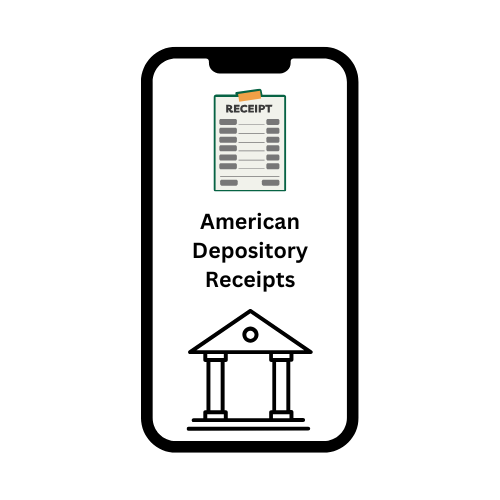
That’s exactly where American Depositary Receipts—ADRs—come in. Basically, they are negotiable certificates issued by a U.S. bank, representing a specific number of shares in a foreign company.
Imagine wanting a piece of a massive international corporation, but doing it right through your regular brokerage account. That’s what ADRs do. U.S. investors buy these shares on domestic exchanges, using standard U.S. dollars, during normal local trading hours. They strip out the logistics of currency conversion and foreign settlement entirely. It’s a bridge. It connects foreign businesses with American money, cutting the hassle of direct cross-border investing down to zero.
Importance in Global Finance
We take moving capital across borders for granted today. But ADRs actually played a pivotal role in forcing global financial markets to integrate.
They give you straightforward opportunities to tap into overseas growth stories, entirely bypassing the usual barriers. Think of them as your financial passport. You explore international markets without ever leaving your home exchange. In the big picture, this enhances market liquidity and significantly drives the globalization of our investment portfolios.
History and Background of ADRs
Evolution of ADRs
You might assume this is some modern fintech workaround. It isn’t. The concept actually dates all the way back to the early 1920s.
Back then, U.S. banks realized American investors were increasingly hungry for foreign securities. As global commerce exploded, Wall Street desperately needed a streamlined mechanism to trade non-U.S. stocks. ADRs naturally evolved over the decades to fix this. They adapted to changing regulations and new tech, transforming from a quirky niche product into a massive mainstream instrument. Today, they support thousands of foreign companies.
This evolution mirrors the growing interconnectedness of global markets. They started as a simple fix for trading in unfamiliar territory and became a total cornerstone of international commerce.
Regulatory Framework
If the phrase “foreign equities” makes you sweat about potential scams, relax. The regulatory framework governing ADRs is incredibly strict.
U.S. securities regulators—primarily the Securities and Exchange Commission (SEC)—have set hard guidelines to ensure transparency and actually protect investors. Any foreign company issuing ADRs must adhere to specific, rigorous reporting standards. That gives U.S. investors genuine assurance regarding the company’s financial health and corporate governance.
Depositary banks also carry a huge compliance load. They ensure the foreign shares are handled securely. This dual layer of oversight—federal regulators on one side, issuing banks on the other—is what builds real investor confidence.
How ADRs Work
Issuance Process
Let’s look under the hood. How does a foreign stock turn into an ADR?
It starts when a foreign company decides it wants access to U.S. capital markets. They partner with a U.S. depositary bank. That bank goes out and purchases a bulk order of the company’s shares directly in its home market. Those shares go straight into custody.
The bank then issues ADRs representing a predetermined number of those exact shares. From there, investors buy those ADRs on U.S. stock exchanges just like any domestic stock. It’s wildly efficient.
Role of Depositary Banks
Depositary banks do the heavy lifting here. Honestly, they act as the sole intermediary between the foreign company and U.S. investors.
Their plate is full. They issue the ADRs, manage the underlying shares, and make absolutely sure every transaction complies with regulatory standards. After facilitating that initial conversion, they handle the administrative grunt work: dividend payments, currency conversions, and tracking.
Custody and Administration
Where do the actual shares live? They sit with the depositary bank in a foreign custodian account.
This custody arrangement is your guarantee. It proves that real, tangible shares back every single ADR you hold. On the administrative end, the bank manages corporate actions. Dividend distributions, stock splits, proxy voting—they handle it all, integrating it directly into the ADR framework. You get the perks of ownership without the brutal headache.
Advantages of ADR Stocks
Access to Global Markets
The biggest selling point? Access. You can aggressively diversify your portfolio with companies operating far outside the United States.
Geographic diversification helps mitigate risk. It also supercharges potential returns by tapping into growth opportunities in both emerging and established markets. It’s like having a massive multi-national menu for your portfolio. You aren’t stuck eating just one local cuisine.
Simplified Trading Process
We trade ADRs on U.S. stock exchanges. We use U.S. dollars.
That completely eliminates currency conversion steps and the need for messy foreign trading accounts. This simplicity makes them highly attractive to U.S. investors who want foreign exposure but refuse to deal with cross-border technicalities. By killing the complexity, you get to focus on what actually matters—evaluating the business itself. The trading process exactly mirrors domestic stocks, so even total novices can navigate it easily.
Risks and Considerations
Currency Risks
Let’s talk about the elephant in the room: risk. ADRs are not foolproof. Currency risk is arguably the biggest hurdle.
Even though you trade in U.S. dollars, the underlying assets are priced in the issuing country’s local currency. If exchange rates fluctuate, your ADR’s value swings right along with them. If the foreign currency tanks against the dollar, the value of your investment will likely decline—even if the actual company is crushing its earnings.
Investors must stay awake to this. Hedging against currency fluctuations and diversifying across different markets can help.
Regulatory and Market Risks
Then you have to consider the company’s home turf. Different countries have vastly different regulatory environments.
They vary wildly in transparency, corporate governance, and basic investor protections. This impacts how much you can actually trust the company’s financial information. Add in market risks—geopolitical tensions, economic instability, weird local practices—and things get dicey fast.
Diligence is non-negotiable. Conduct thorough research. ADRs simplify buying, but they definitely don’t erase the complexities of international markets.
Comparison with Other International Investment Vehicles
ADRs vs. GDRs
How do ADRs compare to the alternatives? While ADRs target the U.S. market, Global Depositary Receipts (GDRs) do the exact same thing on a global scale.
GDRs are issued outside the U.S. and trade across multiple markets simultaneously. This gives them a broader reach. Yet, ADRs stay incredibly popular. Why? Investors love the stability of the U.S. regulatory environment and the ease of well-established U.S. exchanges. Choosing between them depends entirely on your geographic focus and risk tolerance.
ADRs vs. Direct Foreign Listings
Direct foreign listings mean buying shares straight off a foreign exchange.
It’s complicated. You face language barriers, completely misaligned trading hours, and alien regulations. ADRs bundle those same foreign shares into a format we actually understand. Direct listings offer purer exposure, sure. But ADRs bring convenience and a comforting layer of regulatory oversight. It’s a classic trade-off: direct exposure versus ease of access.
Impact on Investors and Market Dynamics
Investor Benefits
For the retail investor, ADRs just make life easier. You invest internationally without juggling currencies or bizarre foreign rules.
This access drastically enhances portfolio diversity, which can lead to far more stable long-term returns. Plus, because they answer to strict U.S. market regulations, ADRs typically feature highly detailed financial disclosures. That transparency heavily boosts your confidence and decision-making power.
Market Liquidity and Volatility
On a macro level, ADRs inject serious liquidity into the global financial system. They smooth out capital flows and hand foreign companies access to deep pools of capital.
The catch? Liquidity breeds volatility. Picture a chaotic marketplace with international vendors. The variety is great, but the rapid-fire transactions create sudden price swings. ADR liquidity is a double-edged sword—massive opportunities mixed with sharp challenges.
Real-World Examples and Case Studies
Successful ADR Listings
We’ve seen huge success stories. Several high-profile tech and consumer goods companies have used ADRs to explode their visibility in the U.S. market.
By doing so, they attract a deeply diverse investor base. This translates to enhanced credibility, strong investor confidence, and better access to capital. These wins prove foreign firms can effectively handle international finance. They are the ultimate case studies for companies wanting global expansion without the nightmare of direct foreign listings.
Notable Failures and Lessons Learned
But the graveyard is full, too. Some ADR stories end terribly due to poor market performance, regulatory missteps, or sudden economic shocks.
The lesson? Due diligence and corporate governance matter. These failures remind us that while ADRs open doors, the risks require active management. You have to evaluate the merits of the specific investment, weighing the opportunities against the realities of diverse regulatory environments.
Conclusion
The bottom line? ADR stocks are a dynamic gateway. They empower U.S. investors to hit the global marketplace easily and confidently.
By packaging complicated international transactions into a simple, domestically traded product, they completely streamline foreign investing. This pushes portfolio diversification while relying heavily on the regulatory oversight provided by depositary banks. Sure, ADRs hand you emerging growth opportunities, but you still face vicious currency volatility and real market risks. Grasping these nuances equips you to actually survive international finance. It’s how you make smarter decisions in an insanely interconnected economy.